The Journal
Stories of Style, Design & Distinction


How to Care for a Leather Bag: The Complete Guide
A luxury leather bag is designed to age beautifully, but proper care makes all the difference. In this guide, discover the essential practices for cleaning, conditioning, storing, and protecting genuine leather, suede, nubuck, and vegan leather bags. Learn how to preserve craftsmanship, prevent damage, and keep your favorite pieces looking exceptional for years to come.
A beautifully made leather bag is designed to accompany you—not remain untouched. With use, genuine leather softens, develops character and, in some finishes, acquires a distinctive patina. Yet longevity depends less on elaborate treatments than on a few considered habits: gentle cleaning, restrained conditioning, natural drying and thoughtful storage.
The first principle is simple: care for the material you actually own. Full-grain, top-grain, finished genuine leather, suede, nubuck and vegan leather can react very differently to moisture and cleaning products. Even within the same category, tanning, dyes and protective finishes influence what is safe. Leather specialists and manufacturers therefore recommend checking the product-specific care instructions before applying any cleaner, conditioner or protector.
Begin by Identifying the Leather
Before cleaning your bag, consult its care label or product description. If the leather type or finish is uncertain, the safest approach is a soft, dry cloth—and professional advice for anything beyond surface dust.
Full-grain leather retains its natural grain and typically develops character through use.
Top-grain leather has been refined or buffed for a more uniform surface and may have a protective finish.
“Genuine leather” is a broad description rather than one specific finish, so its care requirements can vary.
Suede and nubuck have an exposed, velvety nap and require dedicated tools and products.
Vegan leather is an umbrella term covering PU-coated, recycled and emerging plant-based materials; its care should follow the material manufacturer’s instructions.canada+1
The material-first approach below helps prevent a product intended for smooth leather from being applied to suede, nubuck or a coated alternative.
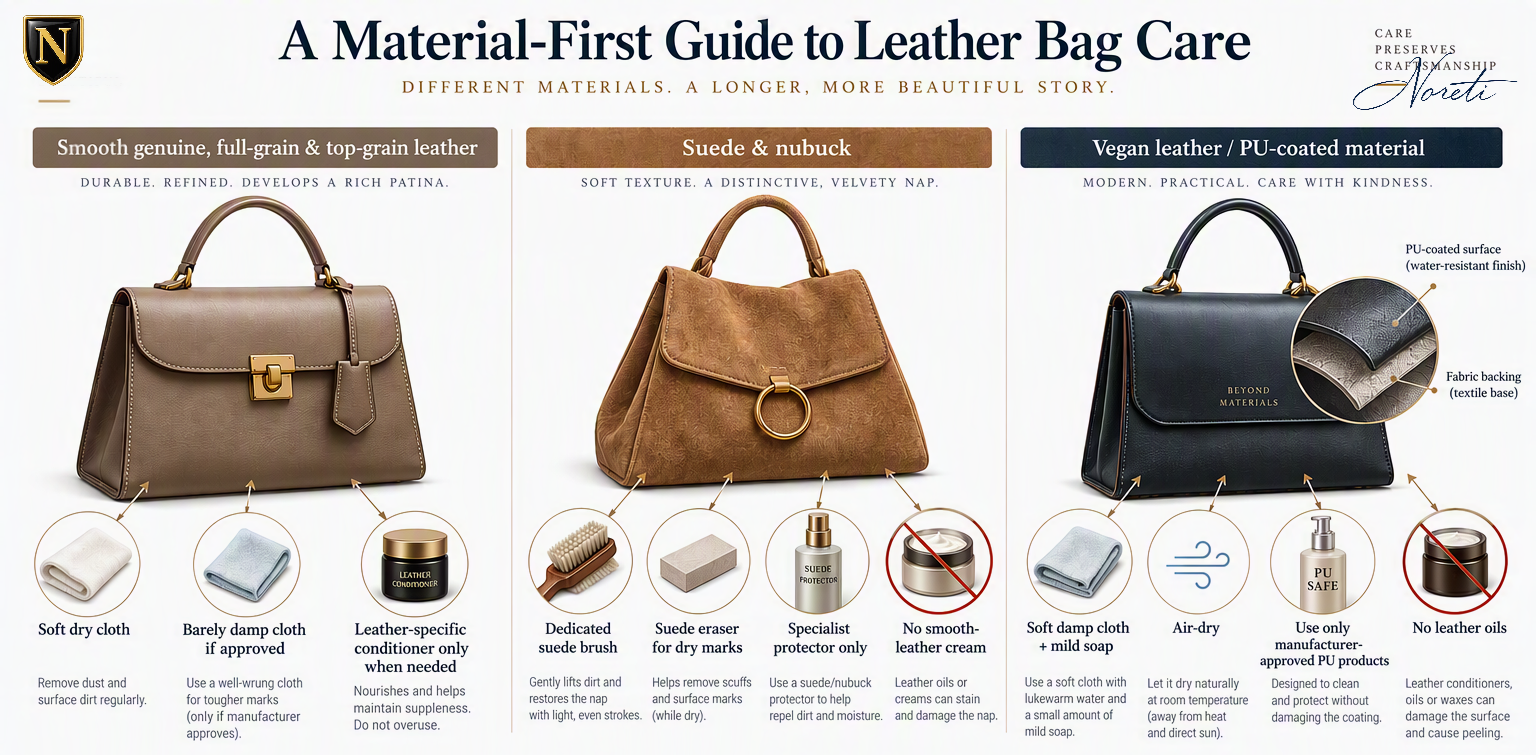
Figure 1: A material-first leather bag care guide: smooth leather, suede or nubuck, and vegan leather require different cleaning and protection methods.
A Simple Routine for Smooth Leather Bags
For most finished genuine, full-grain and top-grain leather bags, the best routine is deliberately understated.
1. Empty and inspect the bag
Remove everything from the main compartment and pockets. Gently shake out loose debris, then inspect the handles, corners, base and areas around the hardware. What appears to be dirt may sometimes be surface wear or a change in the finish, which should not be treated by vigorous rubbing.
2. Remove surface dust
Wipe the exterior with a clean, soft, lint-free cloth. Pay attention to seams, folds and handles, where dust and natural skin oils tend to collect. A dry cloth is often all that is required for routine leather bag care.
3. Spot-clean carefully
If the manufacturer permits damp cleaning, lightly moisten a soft cloth with clean, lukewarm water. The cloth should be barely damp—not wet. Blot or wipe gently without scrubbing, then remove residual moisture with a second dry cloth.
For more persistent surface dirt, use a cleaner specifically approved for the particular leather and finish. Apply it to the cloth rather than directly to the bag, and always test it first on an inconspicuous area. If the leather darkens, becomes tacky or changes texture, stop immediately.mimco+1
4. Allow the bag to air-dry
Let the bag dry naturally at room temperature, away from direct sunlight, heaters and hair dryers. Heat can accelerate moisture loss, while prolonged light exposure can fade color and weaken leather over time.coach+1
For structured designs—such as professional backpacks, briefcases and travel bags in the NORETI collection—lightly support the interior while drying so the bag retains its intended form.
How to Condition Full-Grain, Top-Grain and Genuine Leather
Conditioning can help smooth leather remain supple, but more is not better. Heavy or repeated applications may darken the surface, soften the structure, create a sticky finish or attract dust. Some coated leathers may need little conditioning, while an open, natural finish may respond differently.
Use only a conditioner approved for the bag’s leather type and finish:
Clean the leather first.
Allow it to dry completely.
Patch-test the conditioner in a concealed area.
Apply a very small amount with a soft cloth.
Allow it to absorb, then gently buff away any excess.
Rather than conditioning to a rigid calendar, assess the bag’s use, climate and appearance. Condition when the leather begins to feel dry or when the manufacturer recommends it. Specialist guidance varies because leather finishing methods vary; this is precisely why product-specific instructions should take precedence over universal home remedies.
Caring for Suede and Nubuck Bags
Suede and nubuck should not be treated like smooth leather. Their beauty comes from the raised fibers—the nap—which can be flattened, darkened or made greasy by ordinary leather creams, waxes and oils.
For routine suede or nubuck care:
Allow wet mud or marks to dry before attempting removal.
Use a dedicated suede or nubuck brush to lift dust and restore the nap.
Brush gently and consistently rather than scrubbing.
Use a suede eraser for small, dry marks where appropriate.
Choose only cleaners, conditioners or protectors specifically formulated for suede or nubuck.
Test any protector on a concealed area before treating the entire bag.
If suede becomes wet, blot excess moisture without rubbing, allow it to air-dry completely and then brush the nap gently. Deep oil marks, dye transfer and widespread staining are best handled by a specialist. Suede and nubuck are comparatively absorbent, and unsuitable waxes or oils can create shine, clog the surface or cause permanent darkening.charleskeith+1
How to Care for a Vegan Leather Bag
“Vegan leather” does not describe one universal material. Many vegan bags use a fabric substrate with a polyurethane coating, while others incorporate recycled or bio-based components. Different constructions may require different protectors and cleaning products.fashionjournal
For most smooth, coated vegan leather bags:
Remove dust with a soft, dry cloth.
Wipe light marks with a slightly damp microfiber cloth.
If permitted, use a very small amount of mild soap diluted in water.
Remove any residue with a clean damp cloth.
Dry the surface and allow the bag to air naturally.
Do not automatically apply oils or conditioners made for animal leather. A coated material cannot be assumed to absorb them in the same way, and unsuitable products may leave a greasy residue or affect the coating. If additional protection is needed, use only a product approved for the particular PU, plant-based or alternative material and patch-test it first.fashionjournal+1
Keep vegan leather away from prolonged sunlight and heat, avoid overfilling, and store it with sufficient air circulation. If it becomes wet, remove surface moisture promptly and let it dry naturally.colourlockaustralia
What to Do When Your Leather Bag Gets Wet
For smooth leather:
Blot—not rub—with a clean, absorbent cloth.
Empty the bag if necessary.
Support its shape loosely with plain, colorfast tissue or a soft cloth.
Leave zippers or compartments open for ventilation.
Allow it to dry slowly at room temperature.
Do not place the bag in direct Australian sun, inside a hot car, against a heater or beneath a hair dryer. Once completely dry, assess whether the leather feels unusually stiff before considering a manufacturer-approved conditioner.
Important: Leather finishes vary considerably between manufacturers. Before applying any cleaner, conditioner, waterproofing spray, or protector, always follow the care instructions provided for your specific product and test any treatment on a discreet area first.
Responding to Common Stains
Speed matters, but restraint matters more.
Water: Blot immediately and let the area dry naturally.
Oil or grease: Do not rub or introduce more water. Blot the surface and seek professional assistance if the mark remains.
Ink: Avoid improvised solvents. Ink can spread or remove the leather’s finish, so specialist cleaning is usually the safer choice.
Makeup and perfume: Blot promptly. Alcohol, fragrance oils and cosmetics can affect dyes and coatings.
Mould: Isolate the bag from other leather goods and consult a leather-care professional, particularly if the growth is extensive or returns after drying.
Household stain removers, alcohol, bleach, antibacterial wipes and abrasive cleaners may strip color or alter the finish. Advice involving vinegar, rubbing alcohol or other solvents varies significantly between manufacturers; without explicit approval for the exact material, these treatments are an unnecessary risk.
How to Store a Leather Bag Properly
Thoughtful storage protects both the leather and the construction.
Store the bag in a cool, dry and ventilated place.
Keep it away from prolonged direct sunlight.
Use a breathable dust bag rather than sealing it in plastic.
Lightly fill the interior to preserve its shape, but do not overstuff it.
Store structured bags upright where possible.
Do not place heavy objects on top.
Avoid hanging a heavily loaded bag by its handles for extended periods.
Make sure the bag is completely dry before storing it.
Supporting the interior helps prevent permanent creasing and compression, while avoiding excessive stuffing protects the leather, seams and stitching from tension.
The Essential Leather Bag Care Checklist
Do:
Identify the leather and finish before treatment.
Follow the bag maker’s care instructions.
Patch-test every new product.
Dust regularly with a soft cloth.
Blot spills promptly.
Air-dry away from heat and direct sunlight.
Store supported in a breathable dust bag.
Avoid:
Soaking or machine-washing the bag.
Aggressive scrubbing.
Baby wipes and antibacterial wipes unless explicitly approved by the manufacturer.
Bleach, alcohol, perfume and general household cleaners.
Smooth-leather creams on suede or nubuck.
Animal-leather oils on coated vegan materials.
Over-conditioning or heavy waterproofing treatments.
Storing the bag while damp.
Care as a Form of Appreciation
The finest leather care is quiet and consistent. It preserves the bag without disguising the natural evolution that makes a well-used piece distinctly personal.
By understanding the material, responding gently to spills and storing the bag with care, you allow craftsmanship to reveal itself over time. Explore the NORETI collection of leather goods and refined everyday accessories—pieces created to be carried with confidence, cared for with intention and enjoyed well beyond a single season.
Because exceptional craftsmanship deserves exceptional care.
NORETI™ | The Art of Distinction
*** Resources & Further Reading***
At NORETI, we believe informed ownership is part of true craftsmanship. The following resources provide additional guidance on leather care, preservation, and material-specific maintenance.
Leather Care & Preservation
Canadian Conservation Institute – Comprehensive guidance on the long-term care, storage, humidity control, and preservation of leather goods and leather products.
Coach Australia Product Care Guide – Practical recommendations for cleaning, conditioning, and caring for different leather finishes, including smooth leather, pebbled leather, and specialty leathers.
Suede & Nubuck Care
Leather Hero Australia – Specialist advice for cleaning, conditioning, protecting, and maintaining suede and nubuck leather. Particularly useful for understanding the differences between unfinished and finished leathers.
Vegan Leather Care
Louenhide Care Guide – Practical care recommendations for PU and vegan leather accessories, including cleaning, storage, and moisture management.
Fashion Journal: Vegan Leather Care – Expert insights from the Australian accessories industry on protecting and storing modern vegan leather materials.